


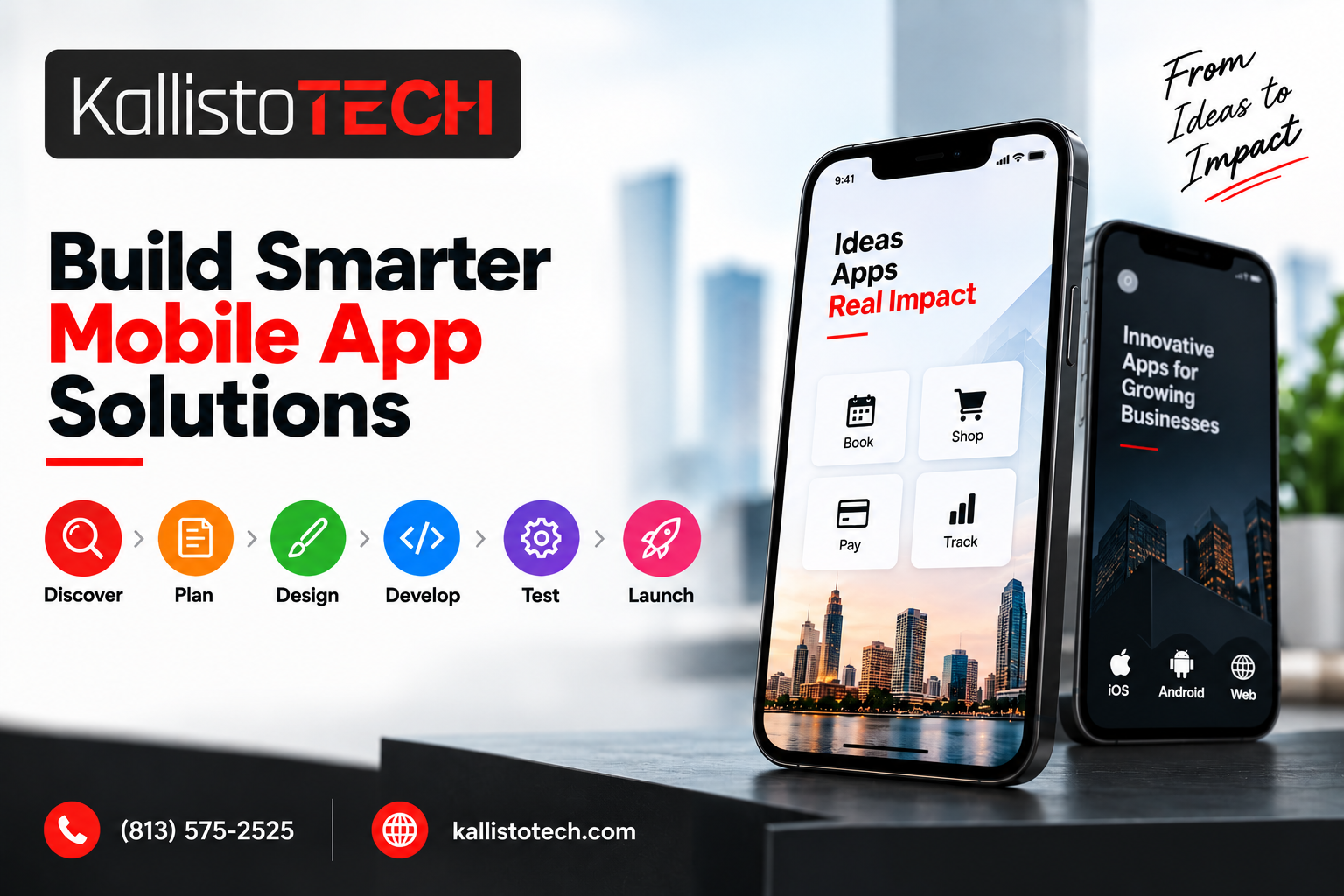
What Is App Development and Why Does Your Business Need an App?
Mobile apps have become an important part of how businesses attract customers, deliver services, process transactions, and build long-term relationships. For many businesses, a website is no longer the only digital channel customers use. An app can provide a more direct and convenient way to interact with a brand.
But what exactly is app development, and when does a business actually need an app?
This guide explains app development in simple terms, its benefits for businesses, the different types of apps companies can build, and how a mobile app can support business growth and long-term sustainability.
What Is App Development?
App development is the process of designing, building, testing, launching, and maintaining a software application for devices such as smartphones, tablets, desktops, or other digital platforms.
When people talk about app development in a business context, they usually mean creating mobile applications for Android, iOS, or both.
The development process can include:
- Business and user research
- App planning and feature definition
- UI/UX design
- Front-end development
- Back-end development
- Database and API integration
- Security implementation
- Testing and quality assurance
- App Store and Google Play deployment
- Ongoing maintenance and updates
A simple business app may only require a few core features, while an advanced application may include payment processing, GPS, artificial intelligence, real-time messaging, booking systems, analytics, or integrations with other business software.
Why Is App Development Important for Businesses?
An app gives businesses a direct digital channel to their customers. Unlike many traditional marketing channels, a mobile app can remain on a customer’s device and provide access to products, services, support, and account information whenever needed.
For businesses that have frequent customer interactions, an app can improve convenience while also creating additional opportunities for engagement, sales, and customer retention.
Here are some of the main reasons businesses invest in app development.
1. An App Can Improve Customer Experience
Customers generally prefer convenient experiences. An app can bring commonly used services into one place instead of requiring customers to repeatedly visit a website, make phone calls, or complete manual processes.
For example, a business app could allow customers to:
- Browse products or services
- Place orders
- Make payments
- Book appointments
- Track deliveries
- Contact customer support
- Manage their accounts
- Receive updates
- Access loyalty rewards
Reducing unnecessary steps can make it easier for customers to do business with you.
2. Mobile Apps Create a Direct Customer Connection
A website depends heavily on customers remembering your brand, searching for it, or following a link.
An app can sit directly on the customer’s smartphone.
This creates an additional channel for communication. Depending on the business model and user permissions, companies can use features such as push notifications to communicate important updates, promotions, reminders, new product announcements, and personalized offers.
The key is relevance. Excessive notifications can frustrate users, while useful notifications can bring customers back to the app.
3. Apps Can Increase Customer Retention
Getting a new customer is often more expensive than retaining an existing one.
A well-designed app can encourage repeat interactions by making it easier for customers to purchase again, reorder a service, check their account, use rewards, or receive personalized recommendations.
For example, a restaurant could use an app for ordering and loyalty rewards. A healthcare business could provide appointment management. An e-commerce company could make repeat purchases faster.
The app becomes useful because it solves a recurring customer problem.
4. Apps Can Create New Revenue Opportunities
An app can support different revenue models depending on the business.
Common examples include:
- Product and service sales
- In-app purchases
- Subscription plans
- Booking fees
- Premium features
- Advertising
- Membership programs
- Digital products
- Commission-based marketplaces
For an existing business, the app does not necessarily need to create an entirely new revenue stream. It can also make the existing purchasing process faster and easier.
5. Apps Can Give Businesses Useful Customer Insights
Applications can generate valuable first-party data when it is collected lawfully and transparently.
Businesses can analyze information such as:
- Which features customers use
- Which products receive the most attention
- Where users abandon a process
- How frequently customers return
- Which services generate the most engagement
- How users move through the purchasing journey
These insights can help businesses improve their products, marketing, customer service, and overall digital experience.
Privacy regulations and platform policies still apply, so businesses should collect only the information they need and clearly explain how customer data is used.
6. Apps Can Strengthen Brand Recognition
A mobile app gives a business another branded touch point.
The app icon, interface, colors, content, notifications, and overall experience can reinforce the company’s identity every time customers interact with it.
This does not mean every business needs an app simply for branding. The strongest business apps combine branding with a practical reason for customers to keep using them.
7. Apps Can Automate Business Processes
An app can reduce manual work by connecting customers directly with internal systems.
For example, instead of having employees manually manage every appointment, an application could allow customers to select an available time slot themselves.
Similarly, an app can automate:
- Appointment scheduling
- Order management
- Payment collection
- Customer notifications
- Delivery tracking
- Account management
- Support requests
- Loyalty programs
- Employee workflows
Automation can save time and reduce avoidable errors when the underlying system is properly designed.
8. Mobile Apps Can Help Businesses Stay Competitive
Consumer expectations change as technology changes.
If competitors provide customers with fast digital ordering, real-time updates, easy booking, or personalized experiences, businesses that rely entirely on slow or manual processes may find it harder to compete.
An app can help a business meet those expectations, but technology should follow the business need rather than the other way around.
A company should develop an app because it improves a customer or operational process, not simply because competitors have one.
What Types of Businesses Can Benefit From an App?
Almost any business can technically build an app, but the value varies significantly by business model.
Apps can be particularly useful for:
E-commerce Businesses
E-commerce apps can support product discovery, shopping carts, payments, order tracking, personalized recommendations, and loyalty programs.
Restaurants and Food Businesses
Restaurants can use apps for ordering, reservations, delivery tracking, loyalty programs, digital menus, and promotions.
Healthcare Businesses
Healthcare applications can support appointment booking, reminders, patient communication, telehealth services, and access to relevant information, subject to applicable privacy and healthcare requirements.
Real Estate Businesses
Real estate apps can help users search properties, save listings, schedule viewings, communicate with agents, and receive property alerts.
Education Businesses
Educational apps can provide courses, assessments, learning materials, progress tracking, and communication between students and instructors.
Financial Businesses
Financial applications can provide account management, transactions, budgeting tools, notifications, and other financial services. These apps require particularly strong security and regulatory compliance.
Travel and Hospitality Businesses
Hotels, travel companies, and tourism businesses can use apps for reservations, itineraries, digital check-in, customer support, loyalty programs, and location-based services.
Service Businesses
Salons, fitness centers, repair companies, consultants, and other service providers can use apps for scheduling, payments, customer communication, and membership management.
What Are the Main Types of Mobile Apps?
Businesses generally choose between several development approaches.
Native Apps
Native apps are developed specifically for an operating system such as Android or iOS.
They can provide strong performance and deep access to platform-specific capabilities, although developing separate applications for different platforms can increase development effort.
Cross-Platform Apps
Cross-platform development allows businesses to create applications that work across multiple operating systems using a shared development approach.
This can reduce development time and cost in some projects while still providing a native-like experience.
Progressive Web Apps
A Progressive Web App, or PWA, is a web application designed to provide an app-like experience through a browser.
PWAs can be useful when a business wants broad accessibility without requiring users to install a traditional mobile application.
The right approach depends on the business requirements, target audience, budget, performance expectations, and required device features.
How Does App Development Work?
A typical app development project follows several stages.
Step 1: Define the Business Goal
Start by identifying the problem the application needs to solve.
For example:
“We want customers to book appointments without calling our office.”
This is more useful than simply saying:
“We need a mobile app.”
Step 2: Identify the Target Users
Determine who will use the application and what they expect from it.
User research can help identify common problems, preferred features, accessibility requirements, and purchasing behavior.
Step 3: Plan the Features
Create a list of essential features and separate them from features that can be added later.
An initial version might include:
- User registration
- Product or service browsing
- Search
- Booking or ordering
- Payment
- Notifications
- Customer support
Step 4: Design the User Experience
UI/UX designers create the screens, navigation structure, visual elements, and user flows.
Good design is not only about appearance. It should make important actions easy to understand and complete.
Step 5: Develop the Application
Developers build the front end, back end, database, APIs, integrations, authentication systems, and other technical components.
Step 6: Test the App
Testing should cover functionality, performance, security, usability, compatibility, and different device conditions.
Step 7: Launch
The application can be submitted to platforms such as the Apple App Store and Google Play, depending on the target devices.
Step 8: Maintain and Improve
App development does not end at launch.
Operating system updates, security requirements, customer feedback, bugs, changing business requirements, and new devices can all require ongoing updates.
How Much Does App Development Cost?
There is no single price for developing a business app.
The cost depends on factors such as:
- Number of platforms
- App complexity
- Number of features
- UI/UX requirements
- Back end infrastructure
- Third-party integrations
- Payment systems
- Security requirements
- Development location
- Testing requirements
- Maintenance needs
A basic informational application can cost considerably less than a large marketplace, banking application, or on-demand delivery platform.
Businesses should therefore define the required functionality before comparing development quotes.
Is App Development Worth It for a Small Business?
It can be, but an app is not automatically the right investment for every small business.
A small business should consider an app when customers regularly need services that an application can make easier, faster, or more convenient.
Useful indicators include:
- Customers make frequent repeat purchases
- Customers regularly book or schedule services
- Customers need order or delivery updates
- A loyalty program is important
- Customers need personalized information
- The business has a recurring subscription or membership model
- Manual customer processes are taking significant time
- A website alone is not providing the required experience
If customers visit the business only once or twice a year and there is little ongoing interaction, a mobile app may provide limited value.
How Can an App Help a Business Grow and Sustain Itself?
Business growth usually comes from acquiring customers, increasing customer value, improving efficiency, and retaining existing customers.
A well-planned app can contribute to all four.
It can make purchasing easier, encourage repeat business, automate repetitive processes, provide customer insights, and create a direct communication channel.
For long-term sustainability, however, the application needs more than downloads. Active users, repeat usage, customer satisfaction, revenue contribution, and operational efficiency are more meaningful measures of success than the number of installations alone.
What Features Should a Business App Have?
The feature set should depend on the business model, but commonly useful features include:
- Secure user registration and login
- User profiles
- Search and filtering
- Product or service catalogs
- Online payments
- Booking and scheduling
- Push notifications
- Location and maps
- Reviews and ratings
- Customer support
- Loyalty and rewards
- Analytics
- Social login
- Order tracking
- Personalized recommendations
Security should be considered from the beginning, particularly when an app handles payment information, personal data, business information, or sensitive customer records.
What Are the Common Mistakes in App Development?
Many app projects struggle because the business focuses on building features rather than solving a specific customer problem.
Common mistakes include:
Building too many features at launch: A complicated first version can increase cost and delay testing with real users.
Ignoring user experience: An app can have excellent technology and still fail if customers cannot navigate it easily.
Skipping performance testing: Slow loading, crashes, and battery-heavy behavior can quickly discourage users.
Treating security as an afterthought: Authentication, data protection, secure APIs, and access controls should be part of the architecture.
Failing to plan maintenance: Apps require updates as operating systems, devices, APIs, security requirements, and customer expectations change.
Measuring downloads instead of business results: Installation numbers do not tell you whether an app is actually helping the company.
Frequently Asked Questions About App Development
What is app development in simple words?
App development is the process of creating software applications for mobile devices, computers, or other digital platforms. It includes planning, designing, coding, testing, launching, and maintaining the application.
Why should a business develop a mobile app?
A business may develop a mobile app to improve customer experience, increase repeat purchases, automate processes, provide personalized services, collect useful business insights, and create a direct communication channel with customers.
Is an app better than a website?
An app is not necessarily better than a website. Websites are easier to access and can reach users without installation, while apps can provide deeper device integration, faster repeat access, notifications, and personalized experiences. Many businesses benefit from having both.
How long does it take to develop an app?
Development time depends on the application’s complexity. A simple app may take a few months, while a complex application with custom back end systems, payments, integrations, and advanced functionality can take considerably longer.
Should a small business have an app?
A small business should consider an app when customers have recurring interactions that an app can make easier or more valuable. Businesses should evaluate customer demand and expected return before investing.
What is the difference between Android and iOS app development?
Android and iOS use different operating systems, development environments, platform guidelines, and device ecosystems. Businesses can develop separate native applications or use cross-platform technologies to support both platforms.
Does an app require ongoing maintenance?
Yes. Apps generally require ongoing maintenance for security updates, operating system compatibility, bug fixes, performance improvements, third-party integrations, and new features.
How can an app increase customer retention?
An app can make repeat purchases and recurring services easier while supporting features such as loyalty programs, personalized experiences, reminders, account management, and relevant notifications.
How do I know if my business needs an app?
Start with the customer problem rather than the technology. If customers frequently need to book, buy, track, communicate, manage accounts, or access personalized services, an app may provide meaningful value.
Final Thoughts
App development is not simply about creating software and publishing it to an app store. A successful business application connects technology with a clear customer or operational need.
For some businesses, that may mean making purchases faster. For others, it could mean automating bookings, improving customer support, building loyalty, or creating a new digital service.
The best starting point is to identify the business problem, understand the users, define the essential features, and choose the development approach that fits those requirements. With the right strategy, an app can become a practical part of a company’s customer experience and long-term digital operations.


