


Social Selling Trends From TikTok Shop to AI Sales
Introduction
Social selling trends now sit at the core of online revenue, not at the sidelines of marketing plans. Many brands still treat social as a billboard, then wonder why conversions stall.
The new reality is simple. Social selling in 2026 runs through TikTok Shop, live commerce, AI-driven creators, and search inside platforms like Instagram and YouTube. Feeds turn into storefronts, live streams act as sales floors, direct messages double as sales calls, and AI speeds the work behind the scenes. This article breaks down those shifts and shows how an integrated setup, not random posts, turns attention into sales.
KallistoTECH steps into this picture as a full-stack partner that stitches social commerce, web, mobile, SEO, and AEO into one revenue system. Keep reading to see where buyers are moving and how to move faster than competitors.
Key Takeaways
Social selling trends can feel noisy, so it helps to see the big picture first. These points preview what the rest of the article explains in more detail. Use them as a quick filter to check how ready your current strategy really is.
- Global social commerce revenue is climbing toward the trillion-dollar range, and that momentum keeps building. Brands of every size now treat TikTok Shop, Instagram Shopping, and similar features as core sales channels, not side projects. If a product looks great on video and works on mobile, it can reach buyers without ever passing through a traditional store page.
- Live shopping sessions usually convert far better than static listings on a regular product grid. Viewers see items used in real time, ask questions, and feel the energy of other shoppers. That mix of urgency and interaction pushes many viewers to act now instead of saving a tab for later.
- Authentic content keeps beating glossy, AI-polished ads when it comes to trust and sales. Buyers spot lifeless scripts and cloned visuals faster than ever. Short, imperfect clips from real people and user-generated content (UGC) often move more revenue than long, overproduced brand videos.
- Social search is starting to replace Google for a big share of discovery, especially for Gen Z shoppers. People type or say questions straight into TikTok, Instagram, YouTube, and even Snapchat. Brands that answer those questions clearly in social content appear first in the research process.
- Brands that win do not rely on a single viral video or a lonely TikTok account. They build integrated infrastructure that links social, live commerce, websites, mobile apps, and CRM data. Without that backbone, even clever campaigns leak revenue at every step.
- Private messaging and chat commerce are turning DMs into checkout lines. Shoppers ask questions in Instagram DMs, WhatsApp, or Facebook Messenger, receive links or cart summaries, and pay inside the same chat thread.
- Augmented reality (AR) and virtual try-ons give shoppers more confidence before they buy. Beauty, fashion, and home brands use AR filters and 3D previews so people can see products on themselves or in their spaces before tapping “Buy now”.
How TikTok Shop And Live Commerce Are Rewriting The Rules Of Online Sales
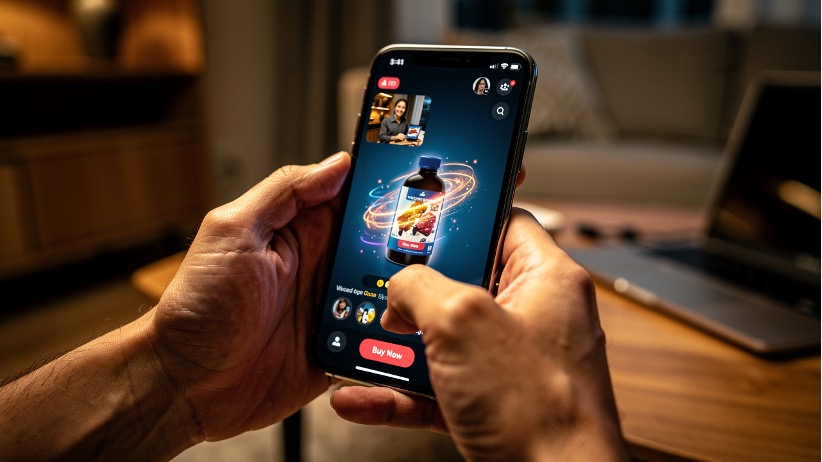
Alt text: “Hands holding phone during live commerce shopping session”
TikTok Shop and live commerce are rewriting online sales by merging discovery, decision, and checkout into a single continuous feed. Instead of sending traffic from social posts to separate stores, the store now lives inside TikTok, Instagram, and other apps.
According to Ringly, global social commerce is on track to approach one point two trillion dollars worldwide. Ringly also reports that TikTok Shop passed around twenty billion dollars in gross merchandise value in 2023 and could reach roughly seventeen and a half billion in United States GMV by 2026. That kind of volume shows this is not a side experiment. It is new retail infrastructure.
TikTok collapses the funnel into a few thumb movements. A creator shows a Dyson hair tool on TikTok Live, answers questions, pins the product, and checkout happens without leaving the stream. Viewers can tap pinned products, drop questions into chat or DMs, and complete payment in seconds. Brands plug in Shopify or WooCommerce in the background, but from the buyer’s view, everything happens in one fluid experience. Amazon Live, Shopee Live, and Instagram Live Shopping follow similar patterns.
Live commerce also hits a different part of buyer psychology than a static product page, and studies like Unpacking Repurchase Intention in social commerce confirm that trust, engagement, and satisfaction from interactive formats are key drivers of repeat buying behavior. Ringly notes that conversion rates for live shopping streams can reach up to ten times those of normal ecommerce pages. Real-time Q and A removes doubts on the spot. Limited-time deals and low stock alerts push action. Comments and likes provide instant social proof.
Here is how the old flow compares to the new one.
| Step | Traditional Online Store | TikTok Shop Or Live Session |
| Discovery | Search ad or random feed post | Short video or live clip inside TikTok |
| Consideration | Separate product page on a website | Repeated demos, chat questions, host guidance |
| Purchase | Cart flow on desktop or mobile site | One-tap purchase inside the same screen |
Research exploring consumer choices in social commerce highlights how consumer behavior in live formats is shaped by genuine interaction rather than scripted automation, and live streams create a format AI struggles to fake convincingly. A slightly awkward laugh, a product surprise, or a clumsy unboxing feels real in a way scripted AI avatars rarely match. That subtle human signal makes live selling a key pillar in modern social selling trends, especially for higher-priced items. Many brands now follow up a strong live session with recap clips, highlight reels, and targeted DMs to keep the momentum going for days.
Some additional live commerce trends gaining ground by 2026 include:
- Creator-hosted shows where brands sponsor recurring weekly or monthly streams instead of one-off events.
- Cross-stream shopping, where the same product link appears across TikTok, YouTube, and Instagram during synchronized launches.
- Group-buy and limited-drop formats that reward viewers for bringing friends into the stream.
Why AI Creators And Automation Are Both An Opportunity And A Warning Sign
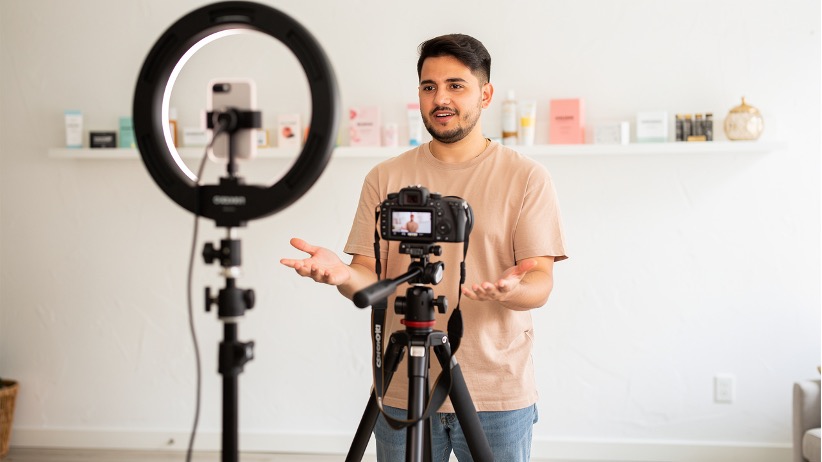
Alt text: “Content creator filming authentic product video in home studio”
AI creators and automation are reshaping social selling trends by cutting production time while raising new trust risks. Used well, they speed up content and targeting. Used blindly, they push buyers away.
Research from Sprout Social shows that ninety-seven percent of marketing leaders say marketers must know how to use AI tools. For social selling teams, that covers predictive analytics, content ideas, headline and hook testing, scheduled posts, and smarter DM flows that route warm leads straight into HubSpot or Salesforce. Social listening tools from brands like Brandwatch or Meltwater scan TikTok, Instagram, X, and Reddit to spot buying signals long before a form fill.
AI-generated characters on social platforms and video tools such as OpenAI’s Sora also change the content mix. Virtual hosts can run product explainers in multiple languages, appear nonstop, and test thousands of creative angles. For high-volume campaigns, this can cut cost per view and keep feeds active even when human teams sleep.
AI is also moving into chat commerce. Recommendation engines suggest products in real time during DMs or live chats, while smart routing passes complex questions to human reps. Dynamic ad systems test creative, audience segments, and product bundles at a pace manual teams simply cannot match.
The warning side is just as real. Hootsuite’s recent social trends research finds that around forty-six percent of social users feel uneasy when AI influencers speak for brands, and nearly one third say they are less likely to choose brands that use AI ads without clear labels, according to Hootsuite. That reaction hits directly at the trust social selling needs.
The most effective pattern looks like this: AI handles the heavy lifting behind the curtain, while humans own the visible story. Teams at KallistoTECH, for example, use AI to speed content drafts and analyze performance but still rely on founders, employees, and real customers on camera. That balance keeps campaigns fast without losing the human voice that closes deals.
As the old sales adage goes, “People buy from people, not from companies.”
Social Search, Creator Advocacy, And The Trends Quietly Dominating 2026
Social search, creator advocacy, and community-led programs now sit at the center of social selling trends, even if they get less headline attention than TikTok Shop. Together, they change how buyers research, who they trust, and where real pipeline comes from.
Sprout Social reports that about one in three consumers now skip Google and start purchase research directly on TikTok, Instagram, or YouTube, with Gen Z well above half, according to Sprout Social. That habit means captions, titles, and on-screen text double as search queries. Instead of vague hashtags, buyers type things like “best CRM for real estate agents” or “how to style curtain bangs” straight into TikTok. Content that answers those phrases in natural language rises to the top, especially when people search for “near me” and other local phrases.
To match this shift, winning brands:
- Use plain-language phrases in captions, thumbnails, and on-screen text.
- Answer one clear question per video or carousel instead of cramming in everything.
- Add time-stamped chapters and descriptive titles on YouTube so viewers can jump straight to what they need.
Answer Engine Optimization (AEO) sits one level higher. AI assistants such as Meta AI and Google’s AI Overviews pull short, direct answers from posts, videos, and articles. Brands that phrase content around clear questions, step by step breakdowns, and simple definitions appear in those summaries before a buyer ever taps through. KallistoTECH’s SEO and AEO services lean on this format so clients speak the same way real people ask.
Trust is also shifting from mega influencers to micro creators and employees. Engagement Labs found that eighty-two percent of consumers say they are very likely to follow recommendations from smaller, trusted creators, according to Engagement Labs. Hootsuite’s trend data shows audiences place more trust in regular employees than in CEOs or branded accounts. That is why B2B teams boost LinkedIn posts from sales reps or engineers instead of only posting from the company page, and why UGC clips from real customers keep showing up in high-performing ad sets.
Creator marketplaces and affiliate programs on TikTok, Instagram, and Amazon are also reshaping influencer marketing. Instead of guessing which creators might perform, brands can filter by niche, audience region, and past sales, then offer revenue-share deals that pay out on every tracked order. This keeps partnerships aligned with performance, not just views.
Tip: When you brief creators, give them the problem your product solves, not a word-for-word script. Their personality is what audiences connect with.
Another quiet trend is the move from broadcast to community. Brands invest in Substack newsletters, Discord servers, WhatsApp groups, and LinkedIn newsletters where a few hundred people interact deeply. Instead of chasing a viral TikTok, they run ongoing series: weekly office clips, founder Q and A, or customer story spotlights. These lightweight shows keep buyers close and feed consistent traffic into webinars, live demos, DM conversations, and live commerce events.
How KallistoTECH Helps Businesses Win In The Social Commerce Era
KallistoTECH helps companies turn social selling trends into measurable revenue by building the infrastructure behind TikTok Shop, live commerce, and AI driven discovery. Rather than offering one-off services, the team connects every touchpoint from the first short video to the final invoice.
On the technical side, KallistoTECH designs and builds ecommerce websites that work hand in hand with social storefronts. A TikTok Shop feature video can link to a conversion-focused product page that loads fast on mobile and reflects the same offer as the live session. Mobile app development for iOS and Android keeps repeat buyers inside branded experiences instead of only inside rented space on social platforms.
Search and discovery sit on another pillar. KallistoTECH combines SEO with AEO so products and services appear in Google, Bing, YouTube, and AI summaries from tools like Perplexity or Meta AI. The company’s own motto, “Stop hoping AI finds you. Start telling AI what to say”, runs through this work. Smart schema, structured FAQs, and clear video descriptions help AI models pick the right message when they answer buyer questions.
Lead generation and marketing systems complete the picture. With more than eighteen years in digital work and over two hundred fifty business growth stories, KallistoTECH builds landing pages, funnels, and email sequences that capture and nurture traffic from TikTok Live, Instagram Reels, YouTube Shorts, and LinkedIn.
KallistoTECH also helps teams connect social commerce features and messaging channels with CRM and analytics stacks. When a prospect clicks a product sticker, sends a DM, or joins a live session, that activity can be tracked through to pipeline and revenue instead of living in disconnected dashboards.
Finally, ongoing social media management keeps everything running. KallistoTECH’s strategists coordinate calendars across TikTok, Instagram, Facebook, X, and LinkedIn so every clip, carousel, and live session pushes toward the same revenue goals. For leaders who want one accountable partner instead of juggling five agencies, this full-stack approach reduces friction and speeds time to profit.
The Bottom Line
Alt text: “Social selling strategy planning workspace with phone and notebook”
Social selling trends in 2026 reward brands that act fast, show real faces, and build systems underneath their content. TikTok Shop, live commerce, chat-based shopping, and AR try-ons now move serious volume by merging discovery and checkout in single sessions. AI tools speed the work but cannot replace genuine human hosts and honest stories.
At the same time, social search, micro creators, and employee voices quietly decide which brands get seen first. Community spaces and recurring series keep those audiences close. KallistoTECH stands in the middle of this shift with integrated services across web, mobile, SEO, AEO, lead generation, and social media. To turn your feeds into a revenue engine, visit kallistotech.com and book a free thirty minute discovery call.
Frequently Asked Questions
Question 1: What is social selling, and how is it different from social media marketing?
Social selling means using social platforms to find, connect with, and nurture buyers through the whole sales cycle. It relies on DMs, comments, live chats, and content that sparks real conversations. Social media marketing focuses more on reach, impressions, and general brand awareness. Social selling tracks relationships, direct conversations, and revenue that come from those ongoing interactions.
Question 2: Is TikTok Shop only effective for B2C brands, or can B2B companies use it too?
TikTok Shop works best for B2C brands that sell physical products, especially in beauty, fashion, home, and gadgets. B2B companies still gain value from TikTok by sharing tips, founder stories, and product education for top-of-funnel awareness. For direct B2B pipeline, LinkedIn usually remains the stronger social selling hub, supported by YouTube, webinars, and LinkedIn Live for deeper demos.
Question 3: How can small businesses compete with large brands on social commerce platforms?
Small businesses compete by leaning into authenticity, niche stories, and direct community ties instead of big ad budgets. Micro creators and real employees often convert better than celebrity endorsements. Services like KallistoTECH’s Marketing in a Box give smaller teams pro-level tech, content, and tracking without enterprise pricing.
Practical ways small brands stand out include:
- Focusing on one or two channels where their buyers already spend time, instead of spreading thin across every platform.
- Partnering with a handful of micro creators who truly use the product and can post regular, honest reviews.
- Turning customer questions from DMs, comments, and support emails into short how-to clips and FAQ content.
Question 4: What is Answer Engine Optimization (AEO), and why does it matter for social selling?
Answer Engine Optimization (AEO) means shaping content so AI assistants present your brand when they answer user questions. As people rely more on Meta AI, Google AI Overviews, and tools like Perplexity, appearing in those short summaries drives early discovery. AEO-friendly content also performs well inside social search because it mirrors the way people phrase real questions in TikTok, Instagram, and YouTube.
Question 5: How do I measure ROI from social selling efforts?
You measure ROI by tracking qualified leads, sales, and repeat customers that start from social actions. Key signals include conversions from live shopping sessions, clicks from Reels or Shorts into store pages, DM conversations that lead to quotes, and form fills from social lead ads. CRM integration and social listening tools connect those actions back to final revenue.
Helpful metrics to track include:
- Revenue and profit from traffic tagged as coming from specific social posts, lives, or creators.
- Lead quality and close rates for prospects who engaged via social channels.
- Retention and repeat purchase rates among customers who first discovered you through social commerce.


