


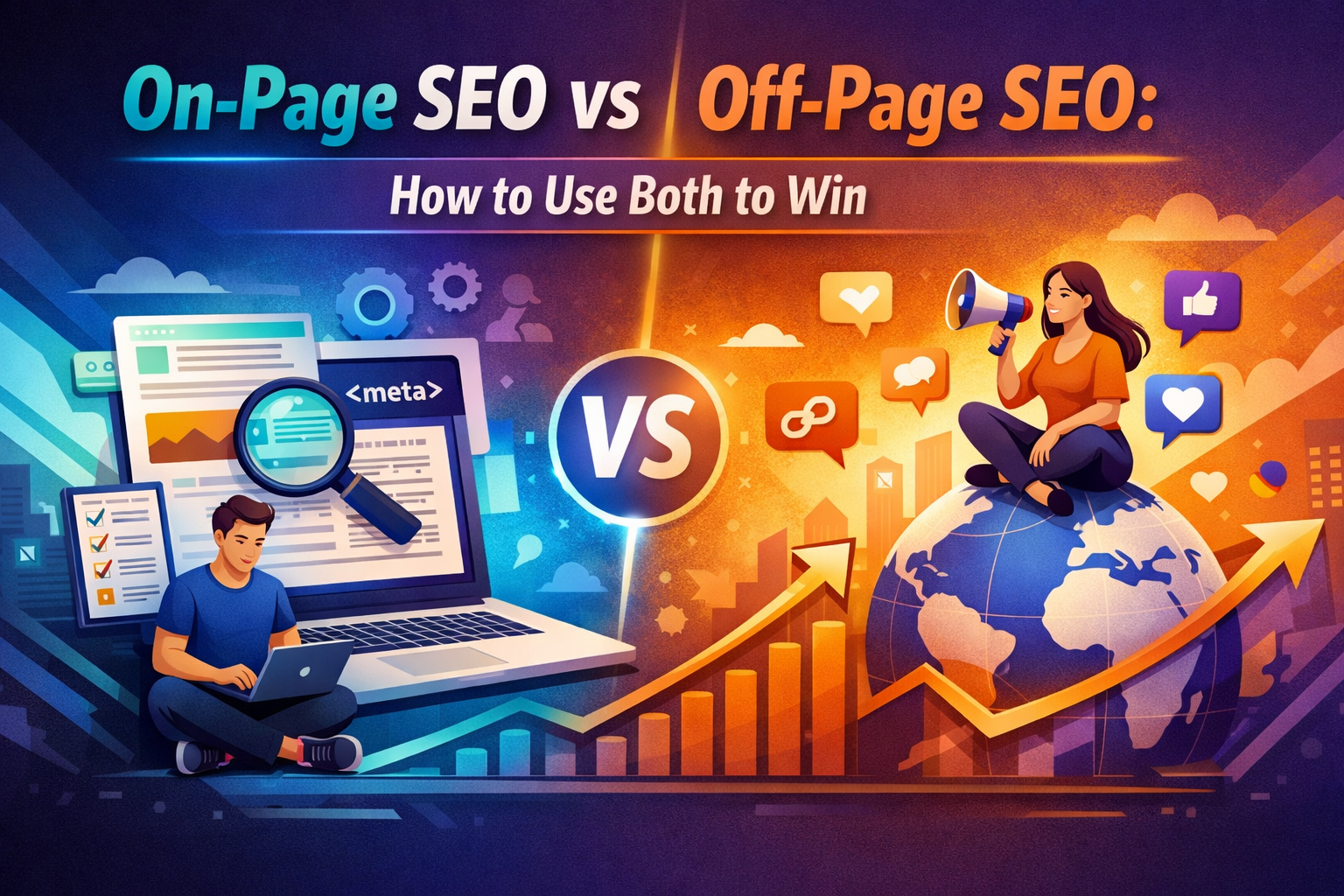
On-Page SEO vs Off-Page SEO: How to Use Both to Win
Introduction
Search rankings are not random. Brands win when they treat SEO as a core channel instead of a side task. Many teams fall behind because they put nearly all their effort into either content tweaks or a handful of backlinks, not both. That split appears every time someone asks about on-page SEO vs off-page SEO and wants one simple winner.
Growth-focused teams know they need more organic traffic and leads, but the noise around tactics makes it hard to decide where to start.
Key Takeaways
Before we dive deeper, here are the fast facts for busy teams.
- On-page SEO lives on your site. It shapes content and structure and guides how search engines and people read each page.
- Off-page SEO lives off your site. It covers backlinks, reviews, and brand mentions that act like votes of trust.
- Doing only one side limits growth. Strong pages with no authority rarely rank, and strong authority with weak pages wastes traffic.
- Start with on-page work. Clean structure and speed help every visit, then off-page efforts create bigger wins.
- KallistoTECH manages both sides together and connects SEO work to leads and revenue, with clear, simple performance reports.
What Is On-Page SEO and Why Does It Matter?
When we talk about on-page SEO, we mean every change made directly on the website. It includes the words people read, the code behind each page, and the layout users move through. Because it all lives on your servers, you have almost full control.
For growing companies, that control matters. You can test, adjust, and improve pages without waiting on anyone else. To keep things simple, we group on-page work into three pillars:
- Content and keyword optimization starts with real questions buyers ask. Create original, helpful copy that answers those questions in plain language. Primary and related keywords belong in headings, body text, and meta fields in a natural way, never stuffed.
“Create helpful, reliable, people-first content.” – Google Search Essentials - HTML elements give search engines extra clues. Title tags and meta descriptions explain the page in short, sharp phrases that win the click. Heading tags and image alt text build a clean outline so both crawlers and people can scan quickly.
- Site structure and usability keep visitors comfortable. Clean URLs, smart internal links, and logical menus help people find the next step. Fast load speed and mobile-friendly design reduce friction and keep engagement high.
Technical SEO is part of on-page work: making sure bots can crawl and index key pages, fixing broken links, using HTTPS, and feeding XML sitemaps plus structured data so important pages qualify for rich results such as review stars, FAQs, and product details.
All of this forms the base that off-page SEO builds on. Without a fast, clear, trustworthy site, even the best backlinks will not move the needle for long. Strong rankings start with strong on-page work.
What Is Off-Page SEO and How Does It Build Authority?

Off-page SEO covers everything that happens away from your website but still affects how high it can rank. When other sites link to a page, mention your brand name, or publish customer reviews, search engines pay attention. In simple terms, off-page SEO is the web’s opinion of your site.
These external signs work like recommendations. The more high-quality signals a brand earns from trusted places, the more confident Google feels about showing its pages near the top for valuable searches. We organize off-page work around three pillars.
- Backlinks and link building sit at the center. A few links from relevant, respected domains are worth far more than dozens of weak directory links. Create link‑worthy content, guest post on aligned sites, and use broken‑link outreach to suggest your resources where they truly fit.
- Brand presence and reputation management widen that circle. Consistent social media activity spreads new content and helps journalists, partners, and influencers discover it. Reviews on platforms such as Google and Yelp build trust for buyers and also support local ranking strength.
- Local SEO signals matter for any business with a physical base or service area. A complete Google Business Profile with accurate hours, photos, and services acts like a mini website in Maps and local packs. Matching name, address, and phone details across directories, plus a flow of fresh local reviews, shows that the business is active and reliable.
“The best off-page signals come from people who choose to talk about you because your content genuinely helped them.” – Common SEO principle
Unlike on-page changes, off-page gains rely on third parties choosing to talk about and link to your site. That means strategy, consistency, and relationship building are essential. With the right plan, these signals compound over time and can push well-optimized pages above much bigger rivals.
On-Page SEO vs. Off-Page SEO Key Differences and How They Work Together

On-Page SEO vs. Off-Page SEO Key Differences and How They Work Together
The table below breaks down the core differences at a glance — from who controls each element to how long results typically take.
| Factor | On-Page SEO | Off-Page SEO |
| Location | Lives on your website | Lives outside your website |
| Control | Full control | Limited – depends on third parties |
| Primary Focus | Content quality & user experience | Authority, trust & external reputation |
| Key Elements | Title tags, meta descriptions, headings, page speed | Backlinks, brand mentions, reviews |
| Impact Speed | Faster | Slower – authority builds gradually |
| Main Goal | Signals relevance | Signals credibility and trust |
When people ask about on-page SEO vs off-page SEO, they often frame it as a contest. In practice, it works more like a tag team where each side has a clear role. Understanding those roles helps you set better priorities.
First, think about focus. On-page SEO deals with what sits on your site itself, from blog posts and product copy to internal links and code. Off-page SEO deals with what others say and do around your brand, such as linking, sharing, and reviewing. One side shapes relevance and user experience; the other shapes authority and trust signals.
Next comes control. With on-page SEO you decide what to change and when to change it. You can rewrite a title, clean up a slow script, or improve a layout in hours or days. Off-page SEO is more indirect because it depends on people outside the company choosing to talk about and link to your site.
That difference shows up in day-to-day work:
- On-page tasks: keyword research, content planning, technical fixes, and user experience testing.
- Off-page tasks: outreach for links, building relationships with partners, earning reviews, and growing a social presence that regularly shares strong content.
Research into the benefits of on-page and off-page SEO confirms that when both sides line up, results compound. High-quality, fast pages give visitors what they hoped to find, which leads to longer visits and more sharing. Those shares and backlinks send stronger trust signals to search engines, which respond with better rankings and even more of the right visitors.
So the real question is not which side to choose, but how fast your team can raise both on-page and off-page SEO to a high level and keep them there together.
How KallistoTECH Helps You Master Both to Dominate Rankings
Many organizations split SEO across several vendors: one agency writes content, another builds links, a freelancer tweaks code, and no one owns the final result. At KallistoTECH we take a different stance. We run on-page and off-page SEO as one connected system aligned with clear revenue targets.
Our SEO and Answer Engine Optimization specialists cover both classic search and newer answer‑driven experiences. We audit technical health, fix crawl issues, and build content that can win featured snippets and other rich results, while outreach campaigns earn high‑value backlinks and brand mentions to support those same priority pages.
We also build and refine the websites those campaigns point to. Our web design and conversion-rate optimization team creates clear structures, fast mobile experiences, and landing pages that turn visits into leads, so every rise in ranking has a direct, measurable effect on pipeline.
Because we run digital marketing programs as well, SEO does not sit in a silo. Content promotion, paid media tests, and social activity all support the same flagship content. Automation tracks rankings, leads, and sales back to specific pages and campaigns, so decisions are guided by data instead of hunches.
For small and mid‑sized companies without a full internal SEO team, this integrated model is hard to match. We provide senior strategy, hands‑on execution, and clear reporting through a single partner. When your team is ready to claim more search real estate, we can help plan and run the program and map the path from current rankings to next quarter’s goals.
Conclusion

On-page SEO and off-page SEO are not rivals. They are two halves of the same engine that powers long‑term search growth. One side shapes what people experience on your site; the other shapes how strongly the wider web vouches for that experience.
According to SEO effectiveness research, companies that invest in only one half of their SEO strategy often see weak, unstable results. Strong content with no authority stalls on page two. Strong link profiles that point to slow, shallow pages fail to win trust from real visitors, and that lost trust shows up in falling rankings.
At KallistoTECH we build both sides together so rankings, traffic, and revenue move in the same direction. If you want to stop leaving easy wins on the table and start owning important keywords, our team can help map a clear, integrated SEO plan for your business.
FAQs
What Is The Difference Between On-Page SEO And Off-Page SEO?
On-page SEO covers everything you change on the site itself, such as content, titles, internal links, and technical health. Off-page SEO covers what happens away from the site, such as backlinks, brand mentions, and reviews. The key difference is control: on-page work is in your hands, while off-page signals depend on other people.
Which Is More Important, On-Page Or Off-Page SEO?
Neither side wins on its own. Strong rankings come from a solid on-page base plus steady off-page authority building. Most teams should start with technical fixes and content upgrades, then increase outreach and link efforts. Treating them as one connected plan produces better, faster results than choosing just one.
How Long Does It Take To See Results From On-Page And Off-Page SEO?
Simple on-page changes such as fixing broken links, speeding up pages, or refreshing content can help within a few weeks. Larger content projects may take a couple of months to show full impact. Off-page gains from link building and reviews usually appear over three to six months as authority builds.
Can I Do SEO Myself, Or Do I Need An Agency?
You can learn the basics and handle simple on-page tasks in‑house. The challenge comes when you need deeper technical work, content at scale, and structured link building. A specialist partner such as KallistoTECH brings proven processes, tools, and a full team, which is hard to match alone.


